
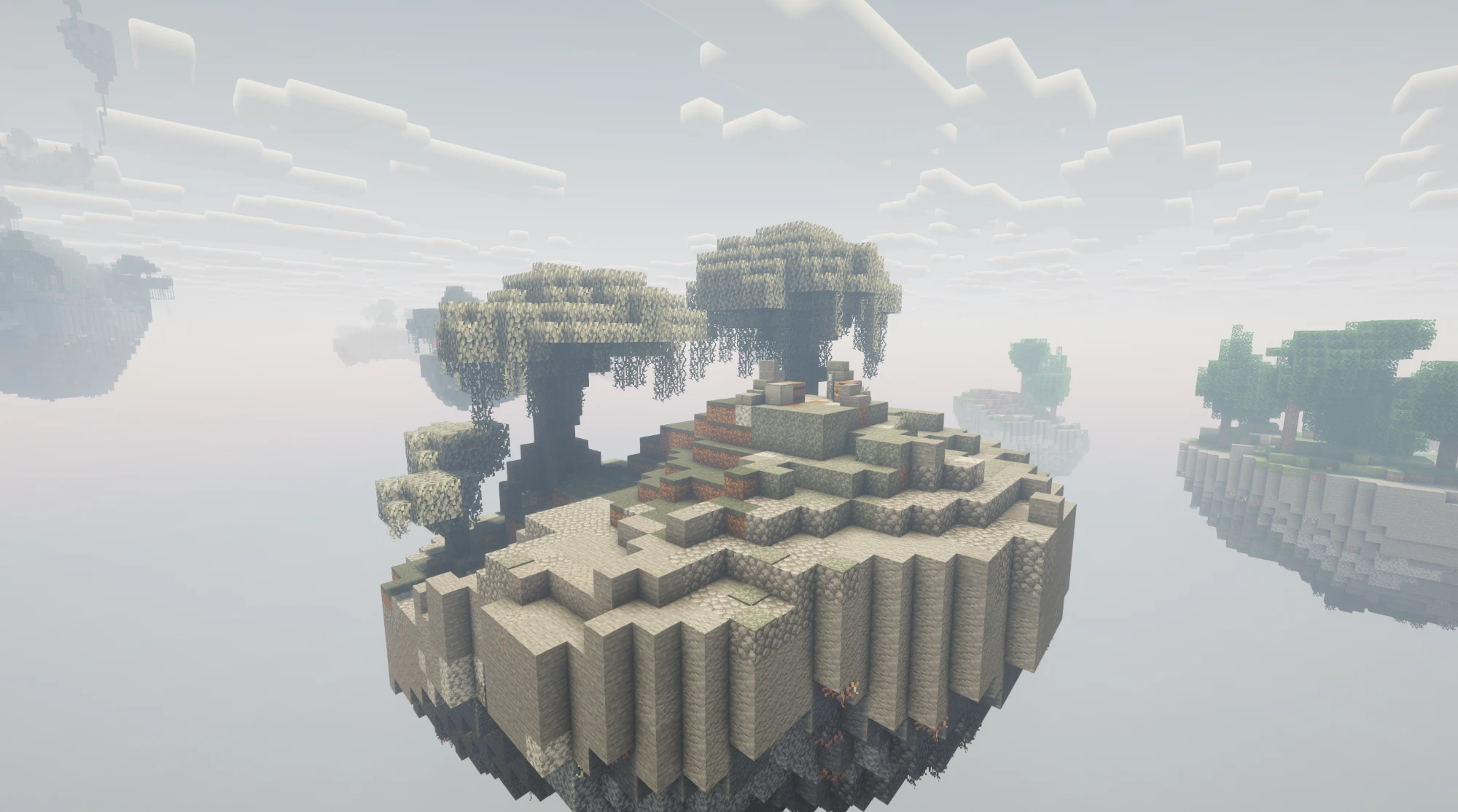
The Island World
Your island has no fixed upgrade levels. Instead, the world grows as you explore: wherever you fly or build, new islands appear – with caves, ores, villages, ruins and residents.
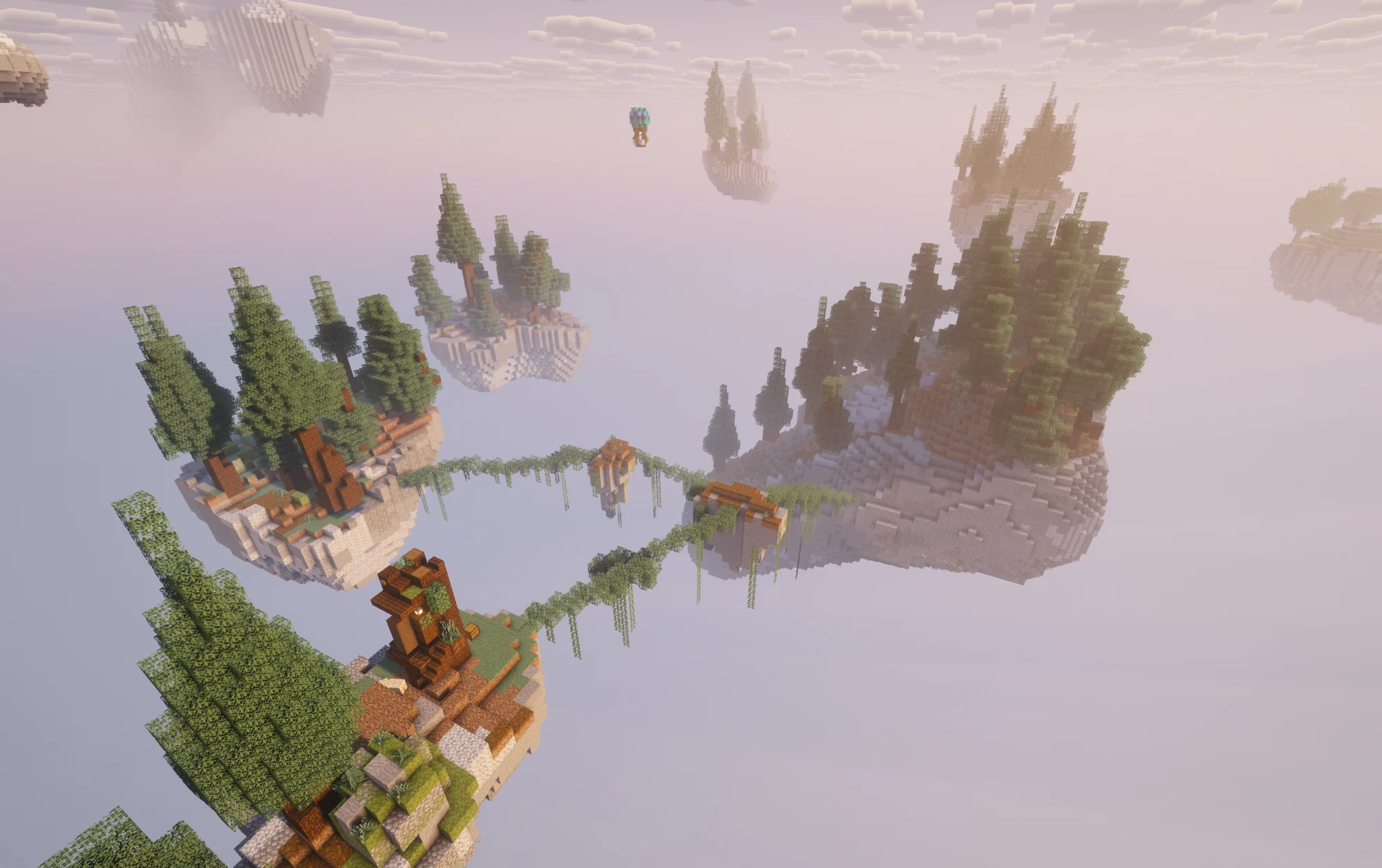
A main island with its side islands, linked by vine staircases
How the world is laid out
Section titled “How the world is laid out”| What | How |
|---|---|
| Grid | The world is divided into cells of 220 × 220 blocks. Each cell has one main island, slightly offset and at different heights |
| Side islands | 2–3 small side islands lie around every main island |
| Vine staircases | A small stepping-stone island with a staircase of leaves and vines leads to the nearest side islands – you get across without building |
| Gap fillers | More small islands fill large gaps between the island groups |
| Ships in the void | Airships, balloons and planes hang between the groups |
| Starting island | In the middle, with four side islands about 100 blocks away. Your first resident lives on one of them |
New islands appear when you get close to them – the ones in the direction you’re looking first. Once something has been generated, it stays. Anyone who only watches on someone else’s island or shops there as a customer doesn’t make new islands appear there.
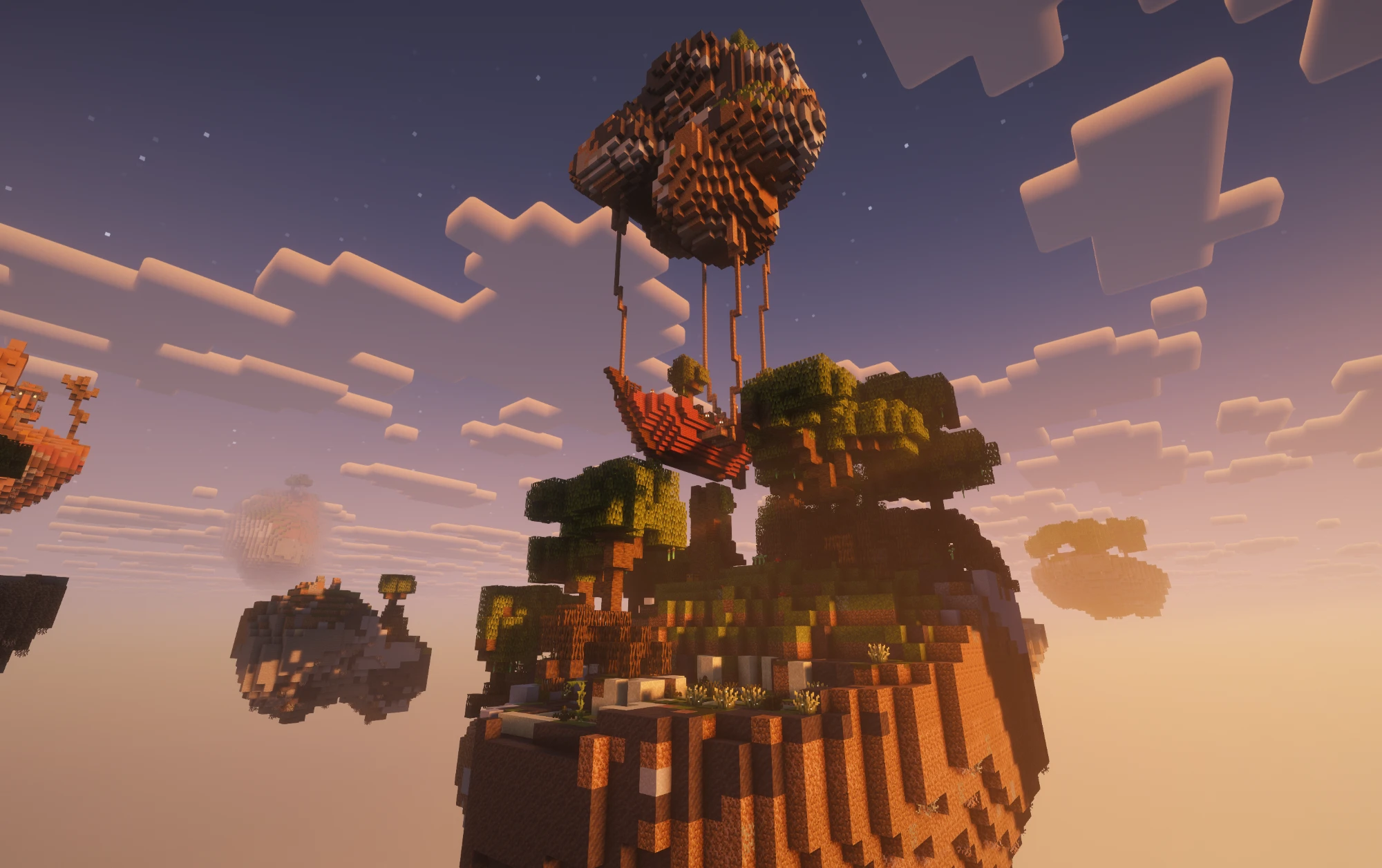
Balloons and airships hang between the islands
Biome areas
Section titled “Biome areas”Islands of the same biome lie in areas of about 3 × 3 cells – around 660 blocks across, usually about nine main islands. You fly through a desert area, then through a forest area.
- About one island in three is a patch of another of your biomes.
- The area around your starting island always has your starting biome.
- Only biomes your island owns are generated. You buy new ones in the skill tree.
- A freshly bought biome is guaranteed to appear in the next new area. After that it’s down to chance – your favourites appear three times as often.
- An explored area keeps its biome, even if you buy new ones later.
What’s on the islands
Section titled “What’s on the islands”Every main island has a cave system with one to three entrances from above: chambers on up to two levels, passages with loops, a large hall and sometimes a pool. Each chamber has its own style – lush, dripstone, ice, mushrooms, magma or plain rock. Rarely you’ll find an amethyst geode. On the cave floor, most likely in such a geode, there’s sometimes a Budding Mana Amethyst – see Furnace Golem & Mana Geode.
The caves are partly lit. Side islands, stepping-stone islands and the starting island have no cave.
Ore lies in small clusters of one to four blocks throughout the rock, and on its own along the cave walls – where two ores touch at most diagonally. The deeper, the more. You can’t see the clusters in the rock – you have to dig. No island shows any ore from the outside.
| Island | Ore, roughly |
|---|---|
| Main island | around 330 ore blocks, about 11 of them diamonds and 90 iron ore; around 200 of them sit visibly on the cave walls |
| Side island | around 16 ore blocks |
| Starting island | none |
Iron is as common as coal – in every biome.
On top of that there’s Mana ore with its pink veins – 4 to 14 blocks in the caves of every main island.
Structures
Section titled “Structures”With a bit of luck you’ll find on an island:
- Villages – from a single house to a small town, with villagers
- Ruins
- Pillager outposts
- Standalone buildings away from the villages
- Floating structures above the island – about one main island in eleven has one
Side islands have at most one small structure. On top of that there are the houses and camps of the AI residents.
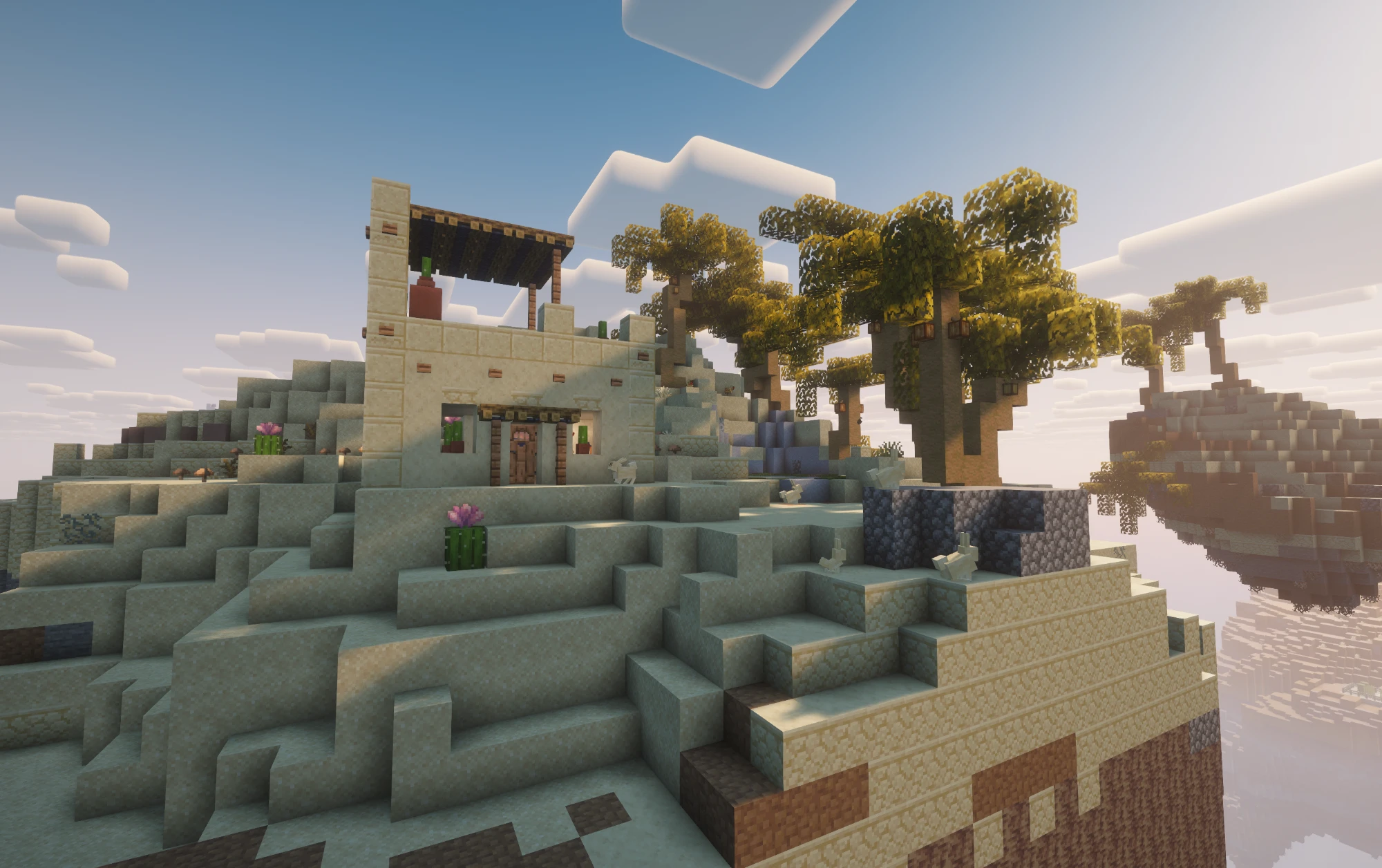
A village in the desert
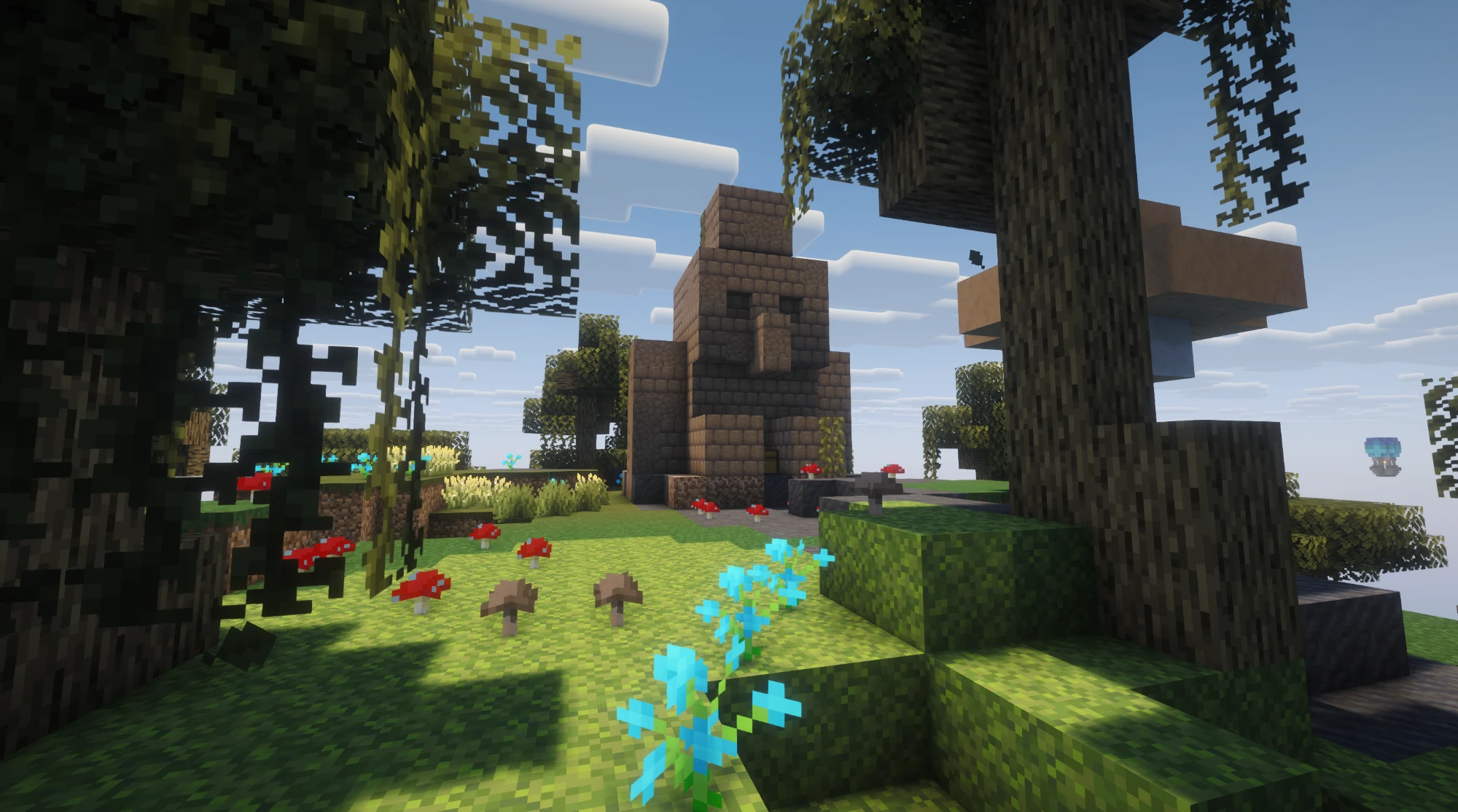
An old statue in the forest
- Every container in a structure is filled the first time you open it – chests, barrels, decorated pots and shelves in houses.
- Some islands have suspicious sand or gravel on the surface, at most three per island. Use a brush to uncover the loot.
- The loot also includes Warpett eggs.
Animals
Section titled “Animals”Which animals live on an island depends on the biome – mooshrooms in the Mushroom Fields, horses and armadillos in the savanna, pandas in the Bamboo Jungle, goats in the mountains, frogs in the swamp.
- The bigger the island, the more animals: one per 250 walkable blocks, at most 16. A main island usually has three or four species.
- Animals come back. If an island near you has been eaten empty, it’s full again after a few minutes.
- Predators and prey never live on the same island – an island with wolves has no sheep.
Monsters
Section titled “Monsters”Monsters spawn in the dark as usual, but far fewer than in normal Minecraft: at most 15 at a time per player. Killed ones are replaced.
The void
Section titled “The void”Below height 0 you die instantly. You keep your inventory and levels and only lose a little Mana. You wake up in your bed – or on the deck of your airship if you don’t have one.